
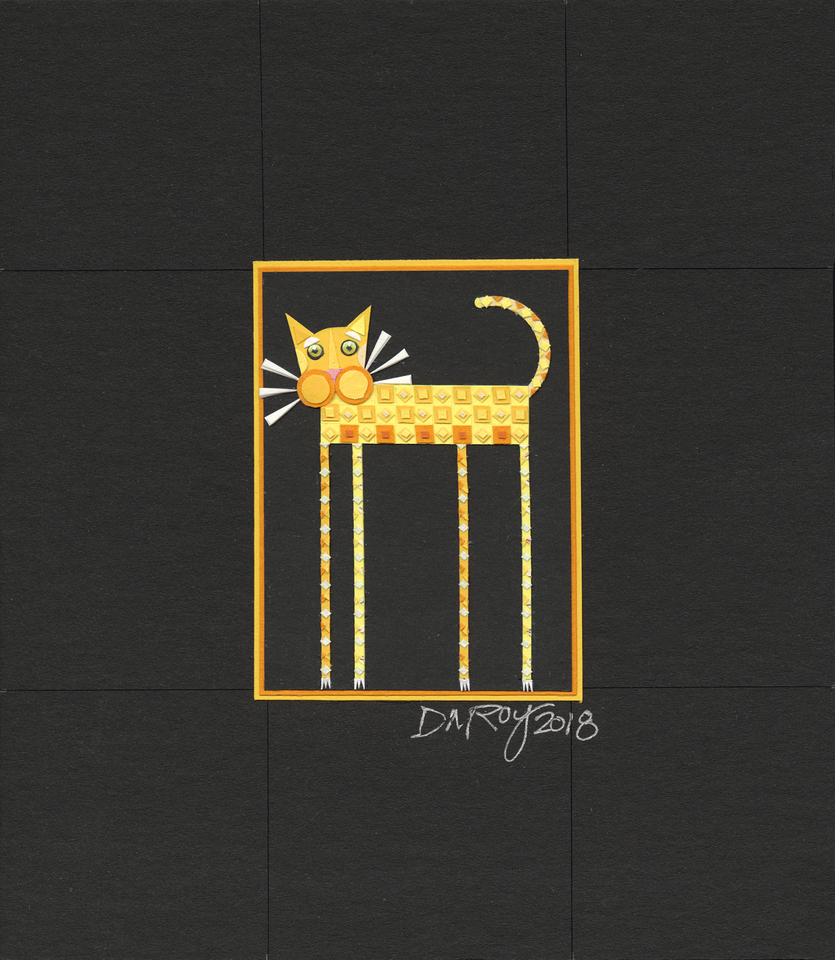
 Doug Roy, Yellow Cat, Cut Paper
Screen Door
bang of the screen door startles me
cats using it for target practice again
my attention span these days?
about as long as a tick on a hot rock
when I get to moving lately
I get nothing done
my cat looks down on me sadly
for badly failing a come to jesus moment
only to become a backsliding biblical scholar
there are truly things wrong with me
most of them my fault
yet I still feel sorry for myself
I have broken both thumbs, bruised countless ribs
worn out two knees and a hip
I am as agile as a concussed turtle
but I’m not that old shrew
that sits a mouse ridden lazy boy on the morning porch
or carries a pistol to the dentist or the piggly-wiggly
or just stares off searching for old groundwork
every morning fate comes creeping on cats paws
reminding me I am the old people now
that our history is only part of the page
so I will write another verse on life
as long as there is a fast-food restaurant philosopher to critic it
____________
Dan Jacoby
Review by Dave Mehler
So many pieces in this issue stand or fall as poetry on the basis of voice. Maybe this only points to my taste as curator, but I think not. It is the specific way of talking or speaking for many poets that causes them to be noticed, heard, lauded, and Jacoby has such a relaxed, casually American voice. He eschews punctuation and capitalization (except for one question mark), and relies pretty much on run-on statements of southern (if there was any doubt about this, piggly-wiggly gives it away?) idiomatic fact, wisdom or rather the speaker’s personal conclusions. The tension is brought about through line breaks and broken syntax, and the fresh flow of images and unpredictable train of thought. Like much of Bukowski’s work, this poet has not the least interest in pyrotechnics or impressing anyone perhaps even the opposite. I think instead it’s about creating an impression, through voice, idiom and register. Maybe also authenticity. Another contributor raised the issue to me about the use of ‘critic’ in the final line–they suggested the poet meant ‘critique.’ I didn’t ask, because I rather like the use of critic instead, and was half afraid it was a typo.