
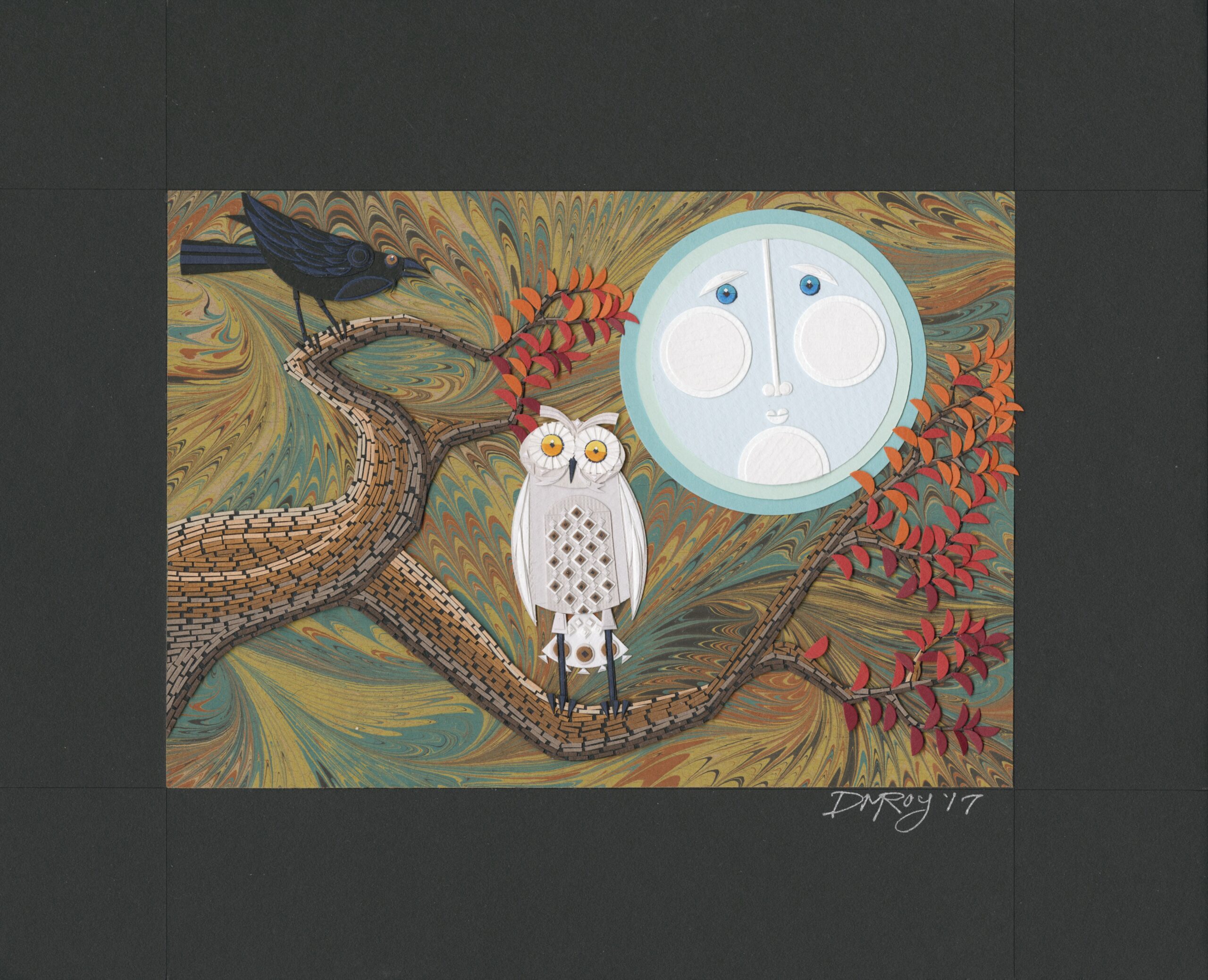
 Doug Roy, Caw Who, Cut Paper
Salmon Ruins, Abandoned after 1263
At dawn fifteen warriors rushed in, pitch torches in hand,
crushed heads with clubs of stone,
shot arrows down into sleeping forms.
The few men not out on the hunt
fought hand to hand, but
could not fight the fire and panic.
The women hurried thirty-three children
to safety, to the tower kiva roof,
crowded, crying as
the roof fell into the flames.
Their screams pierced the warriors’ throats
so they grunted with every stroke of the axe.
INTERVIEWER: It must be difficult to maintain scientific objectivity when uncovering such a tragedy.
ARCHAEOLOGIST #1: I have young children of my own. It upset me to find this.
ARCHAEOLOGIST #2: But it didn’t happen that way. We reinvestigated almost a decade later, and found that the bodies lay on top of the kiva roof rather than underneath it, as they would have if they had fallen through.
The remains of twenty-two children and four adults,
scattered in the detritus, commingled, incomplete,
led investigators to conclude
the dead were dead when the fire started.
Prior to leaving, the villagers burned the site
and cremated the remains of their dead.
ARCHAEOLOGIST #1: They lugged twenty-eight bodies to the roof of the kiva?
ARCHAEOLOGIST #2: We don’t really know what happened.
The Hopi did not endorse, nor did they oppose
the research on their ancestors’ bones.
When the scientists were done, they reburied the remains.
_____________
Bruce Parker
Review by Massimiliano Nastri (for all the poems in this set)
Probably the best: subject, variety of forms (interviews, reports) of voices (archaeologists, Pueblo natives), of time frames (after 1263, 1941, at the time of highways, of looting, of securing the ‘artifacts’ in the museums) – everything ensures the tone is varied and that there’s a twist in each poem. There’s empathy with the stories but – thankfully for me – no preaching. Even the concept of ‘ruins’, proleptically appreciated by subject “That word again. How romantic) before it is actually repeated, signals both the empathy and how one knows one is seen/sized up. Sun Dagger 1977 works perfectly for the recreation of the attitude of the time (stunning wealth and why shouldn’t it be stunning?) and the spirals. Perhaps, this cycle is the work I liked most. Moving, yes, in many places, for the technical skill and the tone, how they went together, parallel. Here, I envy the confidence in building and presenting so much. The twist, the surprise of how all memories may end up becoming mementoes, memorabilia, souvenirs to others, and cherished as “family relic” is really a feat, demonstrates control of the distance not just in tone but in content.