
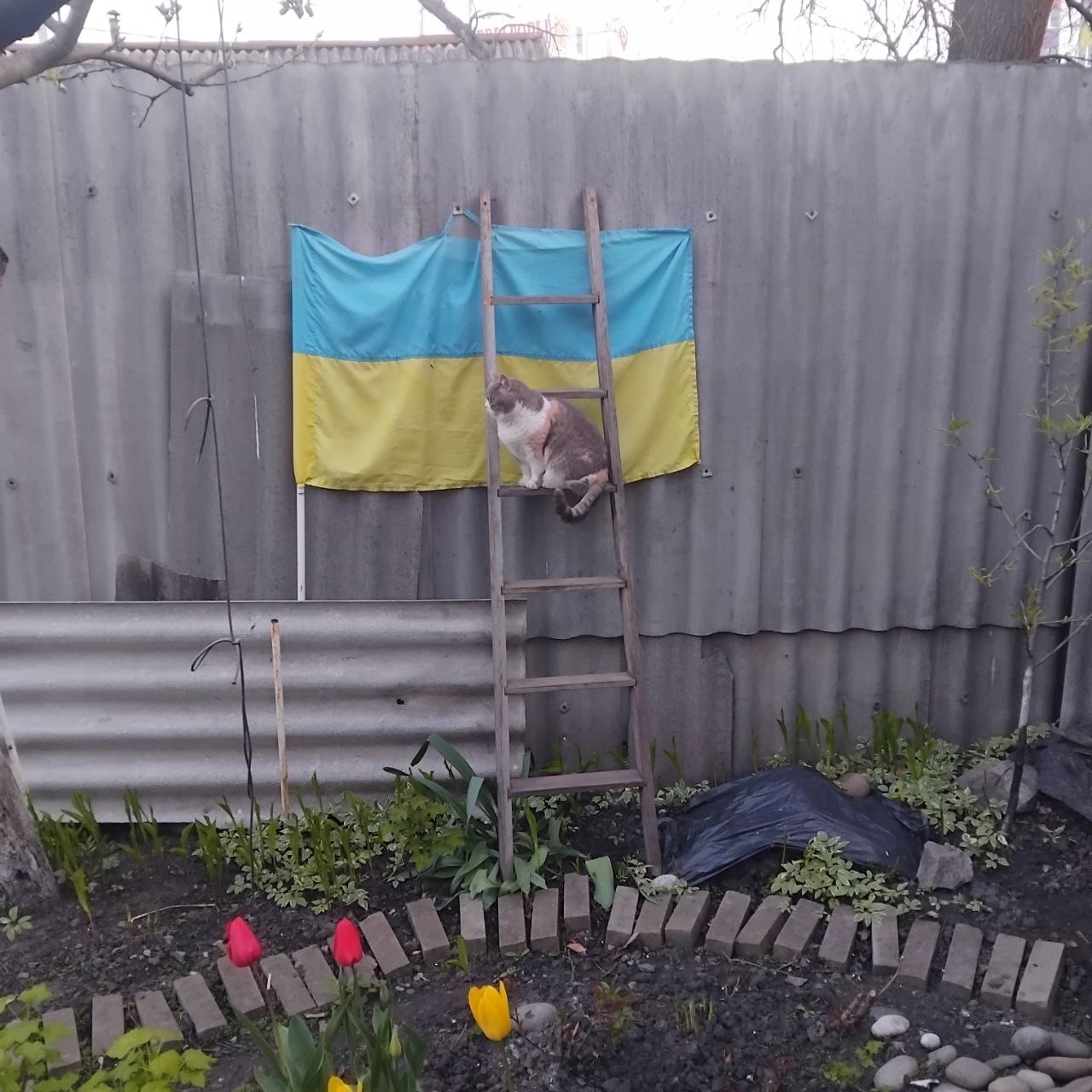
 Dmitry Blizniuk, 2026-05-02, photo
***
не повернути ніколи безтурботні
безглузді мирні дні.
виявляється ми все ще були у раю
на дві чверті, як немовля на виході з лона
синіми ніжками у кольорову темряву
майбутнього.
а зараз ми посеред
уповільненого нудного моторошного пекла війни
розмазаного як масло з кров’ю і битим склом
по ніжних бутербродах днів.
безглузда
жорстокість
безглузда
жорстокість
жорстокість.
увесь світ – карколомний чорно-дзеркальний кадилак,
його стискають в куб з металобрухтом на пресі
разом з молодим і вагітною нареченою.
***
(translated by Gari Light from Ukrainian)
it would never be possible to return to the carefree
senseless peaceful days,
turns out that we were still in heaven
two thirds of a way, as if an infant exiting the womb
with its blue little feet into a colorful darkness
of the future
and now, we are merely half way through
of the unhurriedly unnerving and dull war’s hell
smeared as butter with blood and broken glass
on the tender sandwiches of days
senseless
savagery
senseless
savagery
savagery
this world is an astonishing black-mirrored Cadillac,
compressed into a scrap metal cube by a press
along with a groom and a pregnant bride within
_______________
Dmitry Blizniuk
Review by Dave Mehler
These war poems of Dmitry’s read like diary entries, offering us news reportage of what it’s like to live as a civilian on the front lines, amidst daily drone attacks in a nation, at least where Dmitry lives in the eastern part of the country (Kharkov) that is almost like a civil war, from the standpoint that much of the population under attack is Russian, being attacked by Russians. Do they become indistinguishable aside from a uniform, sharing language and culture, those who are Ukrainian, and those following orders from Putin? No, because at least from the Russian side, they are committing unprovoked, offensive atrocities on their brothers. Where journal or diary turns poetic and transforms into poetry is through Dmitry’s particular way of viewing the world and the conflict. To begin with a few examples, here where he describes peaceful days as ‘senseless’: carefree/senseless peaceful days. We don’t really question senseless in this list of modifiers, I think because in the context of that list we just assume senseless means days that we don’t notice but take for granted, not questioning or thinking much about them (as peaceful or extraordinary) before the groundhog days of war begin, but then once we get to the list a few lines down alternating senseless with savagery the word then takes on its proper place in our mind as meaningless absurdity, or even malicious evil. This turns out to be a very sophisticated brevity and density of conceptual turnabout and poetic device. Dmitry does this kind of thing with imagery also, using the idea of ‘the world’ as a shiny Cadillac (a limo?) with a little plastic couple representing bride and groom from a wedding cake crumpled inside a crushed metal cube of the car. This rather ordinary image from a normal wedding becomes a freighted symbol of celebration and joy and the potential of fertility/abundance–almost like little plastic idols but in this context a symbol of the good, the normal: as distorted, ruined. Those normal days, the poems says, are over forever, or at least until the conclusion of the war, but even after, for those who are living through it now there will be no return. Only later is there a possibility of the memories and the reality gradually dissipating across the generations, but even then will there ever exist a possibility of healing? Will the Ukrainians ever be able to lower their guard again after this?
This brief poem, like a journal entry, does a lot of heavy lifting poetically, matter-of-factly and unpretentiously. Again, the commonplace domestic image of spreading butter on a slice of bread in this newer context also contains the additive of blood and broken glass–this is the new and artificial normal, the new commonplace. A war that routinely attacks a civilian population (of fellow countryman?), instead of militaries of soldiers pitted against each other, now using automated (unmanned) drones becomes a new form of war–an impersonal guerilla weaponry conducting terrorism as the latest tactic and tool in conventional warfare. Dmitry’s poems offer us this news, up close and personal. As it should be.