 At Work
Featured Artist Interview with Doug Roy
TCR: So, I see from your artist statement that you began as an illustrator working with pen and ink and watercolor and were a freelance artist in the LA area before moving to Oregon and turning to paper cutting or carving and glueing as your medium. Part of this change also involved becoming a miniaturist. You suggest that you sort of fell into it, and it evolved, and also you told me changing to paper from illustration was to avoid working on computers, and that you’ve been working in this medium for 35+ years. One thing I’m curious about was how well this change worked as a paid graphic artist move away from conventional illustration. Was the switch still commercially viable? Did you or your employers have to adapt?
DR: The change was commercially viable. I did do some paper pieces for illustration and did ok, till both my reps retired. Then I changed to doing fine art for art fairs and galleries. It’s been ok thus far, but as we age traveling to art fairs and setting up gets harder.
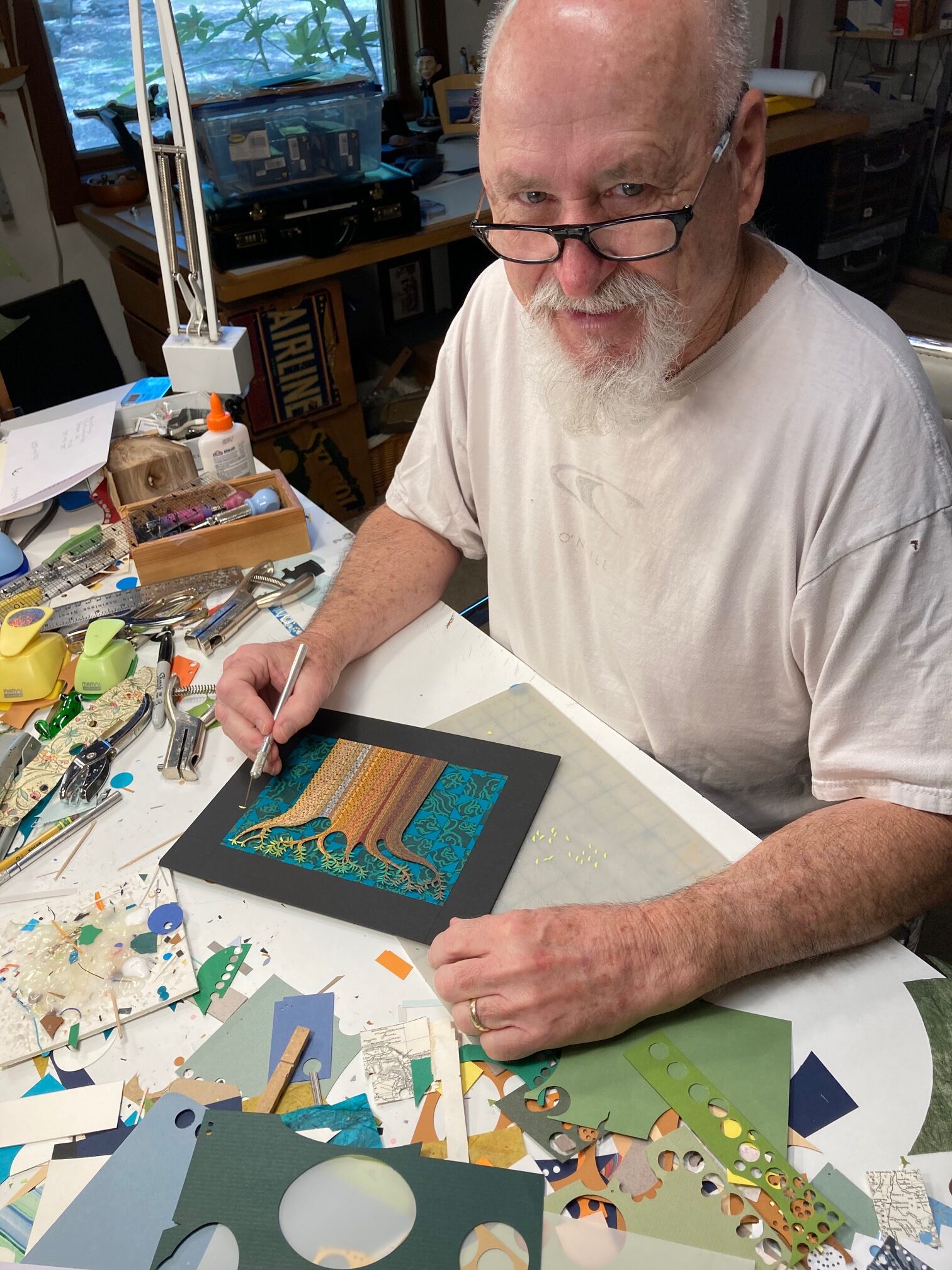
TCR: The process and tools you use to work in this medium are making pieces that are hundreds to thousands of intricately hand cut pieces of colored paper, and your tools are an Exacto knife, a toothpick, Elmer’s glue and a hole punch to build and layer a textured, almost three dimensional piece of art that often tells a story. The pictures usually feature whimsical or beautifully idyllic scenes from all over the world, lots of animals, large trees and water or snow, and also people who are hermits or Picasso-like caricatures, often. When you sit down to start a new picture, what is seeding your inspiration?
DR: I remember one of my professors in an illustration class saying, “The difference between illustration and fine art isn’t very much. In illustration you have a client that tells you what to do and a lot of fine art is you doing what your customers expect from you.”
TCR: Why is it so entertaining or unforgettable to attend a miniaturist’s art convention or curated shows? Can you explain what attracts you to this? Tell us about some of your experiences?
DR: Though the pieces are very small the world you enter through the highly detailed pieces can seem huge. I’ve always liked detail even in my ink drawings. I used to say to the other students jokingly ‘I may not be able to draw you, but I’ll overwhelm you with detail.”
TCR: I notice a childlike heart and a whimsical attitude behind your work, that’s not so much like Norman Rockwell or nostalgic, not naïve or primitive, but it is positive and affirming—often showing the audience the beauty or wonder of the natural world with a twist of imagination, either some or a lot. There is whimsy, imagination and sometimes something akin to magic—a harmony with the natural world. Can you tell us a bit about growing up in Michigan, moving west (to LA to make it as an illustrator), early work and life for you, and how you found your way. Also, I sense a stability and success pursuing this vocation in art that helps to sustain you and your vision. Were there ups and downs along the way? Was money ever tight—in other words how much cost was associated with your choice of work and pursuing your dream. Were there times where you questioned your calling or it was difficult to maintain? What’s your secret to staying positive and going against the grain of so much of contemporary culture?
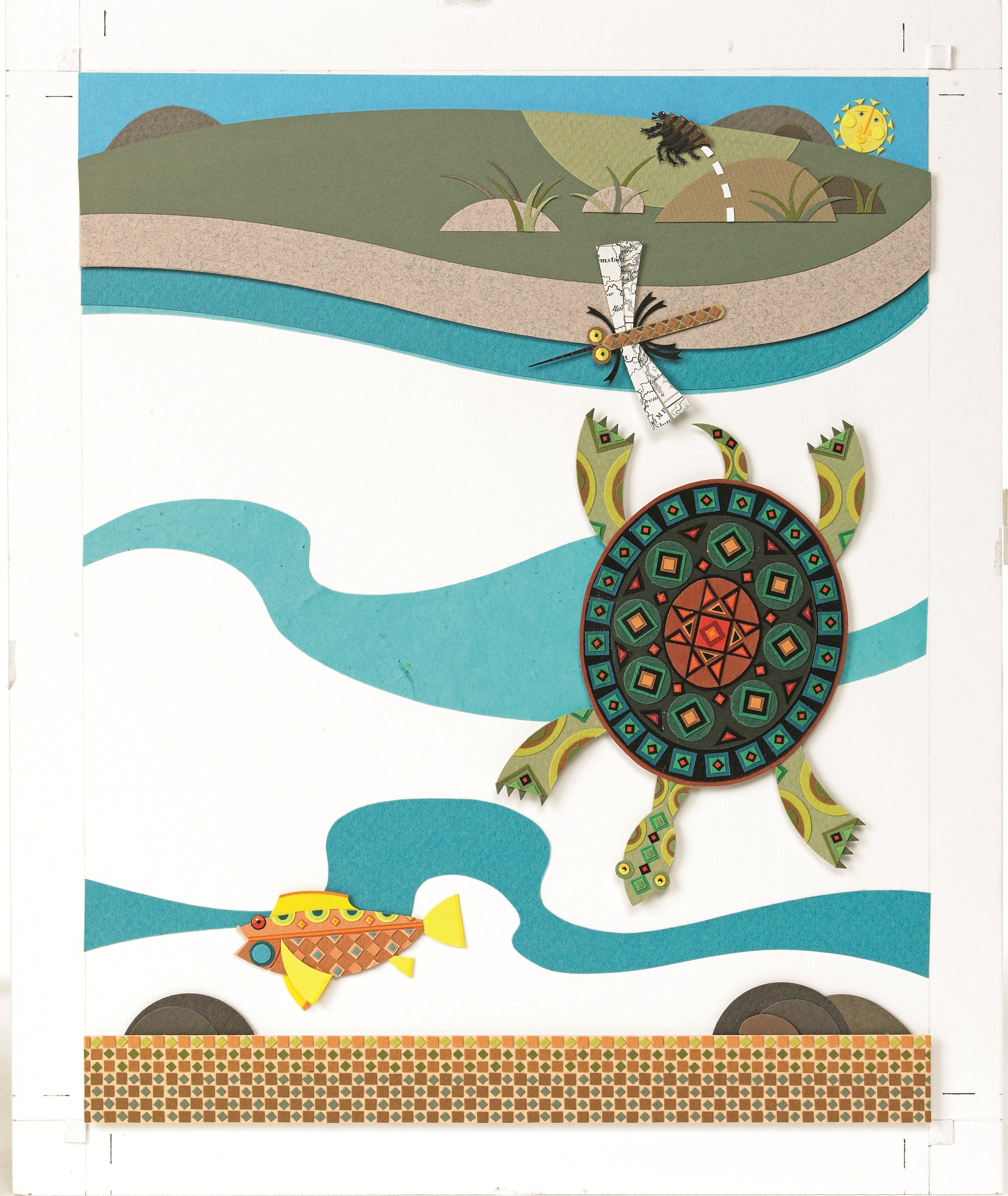 click this link to see the poem and hand game illustration that goes with it: 29.1011L-Turtle
DR: We moved to California when I was only seven. I had an uncle Cal who was an artist and he influenced me as a kid. I think I thought of myself as an artist most of my life, but didn’t think of it as a career. I started out in college thinking I would be an accountant back when you wrote by hand in ledgers. My accounting professor said my books were beautifully printed but my accounting needed work. After three years in the army and marriage to my wonderfully supportive wife I switched my major to Art on the GI Bill.
I couldn’t have done it without Mary. I was lucky to attend Cal State University, Long Beach, where they had many amazing professors in the Art Department. They were all working artists too. It was a great experience.
TCR: You say, “working with paper is the most fun I’ve had making art. It’s the one type of art I feel the most creative and competent in making. I really feel like I was made to do it, and always look forward to starting on the next one.” What do you think your life would be like if you’d never found your way of making art? Does your creativity express itself in any other ways?
DR: A bad accountant who might have served time.
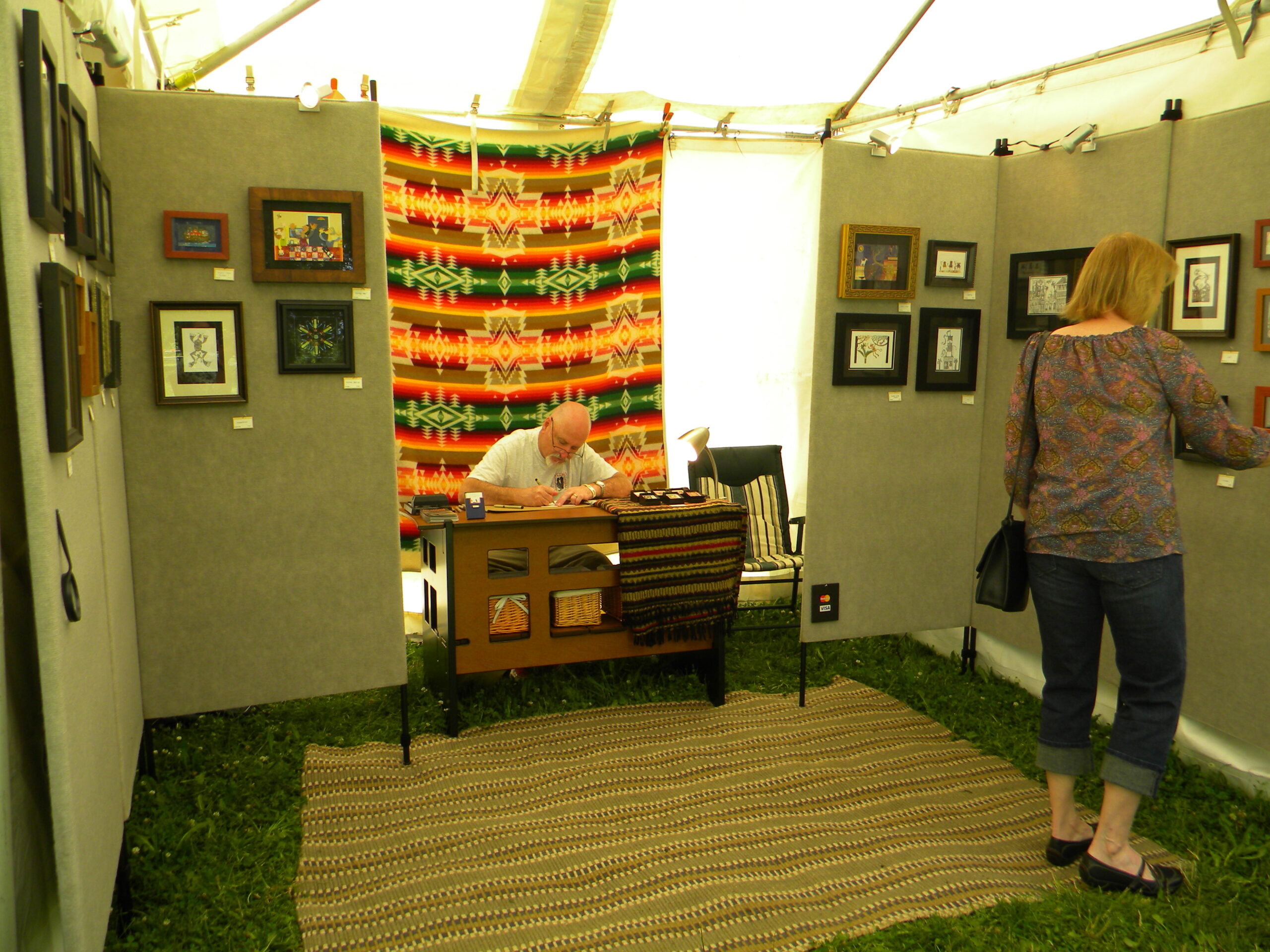
TCR: How much time does it take on average from start to finish to complete a typical piece?
DR: An average size piece, 8″ X 10,” about a week. Depends on the detail of course.
TCR: You say, “I enjoy it when my work brings a smile to someone’s face. I hope you enjoy looking at them as much as I enjoy making them.” Would you say that joy or enjoyment is THE purpose of art? If so this is wonderful—not a problem. But I’m curious. have you ever made art for other purposes, or do you appreciate art that works to do other work? I imagine if you were commissioned by someone to make art, say for advertising or other commercial purposes, you were illustrating for them and their purposes even while your signature idiosyncratic gifts came into play. Some artists, for example, feel compelled to challenge or maybe even offend their audience’s preconceived notions, or they make art to cope with or find answers to problems. There are a number of poems in the issue whose art is doing just that. Have you ever felt compelled to do this. If not, why not do you think?
DR: I appreciate confrontational Art, but I feel there is room for art that gives you a pleasant experience and some sense of awe. I think that’s ok too.
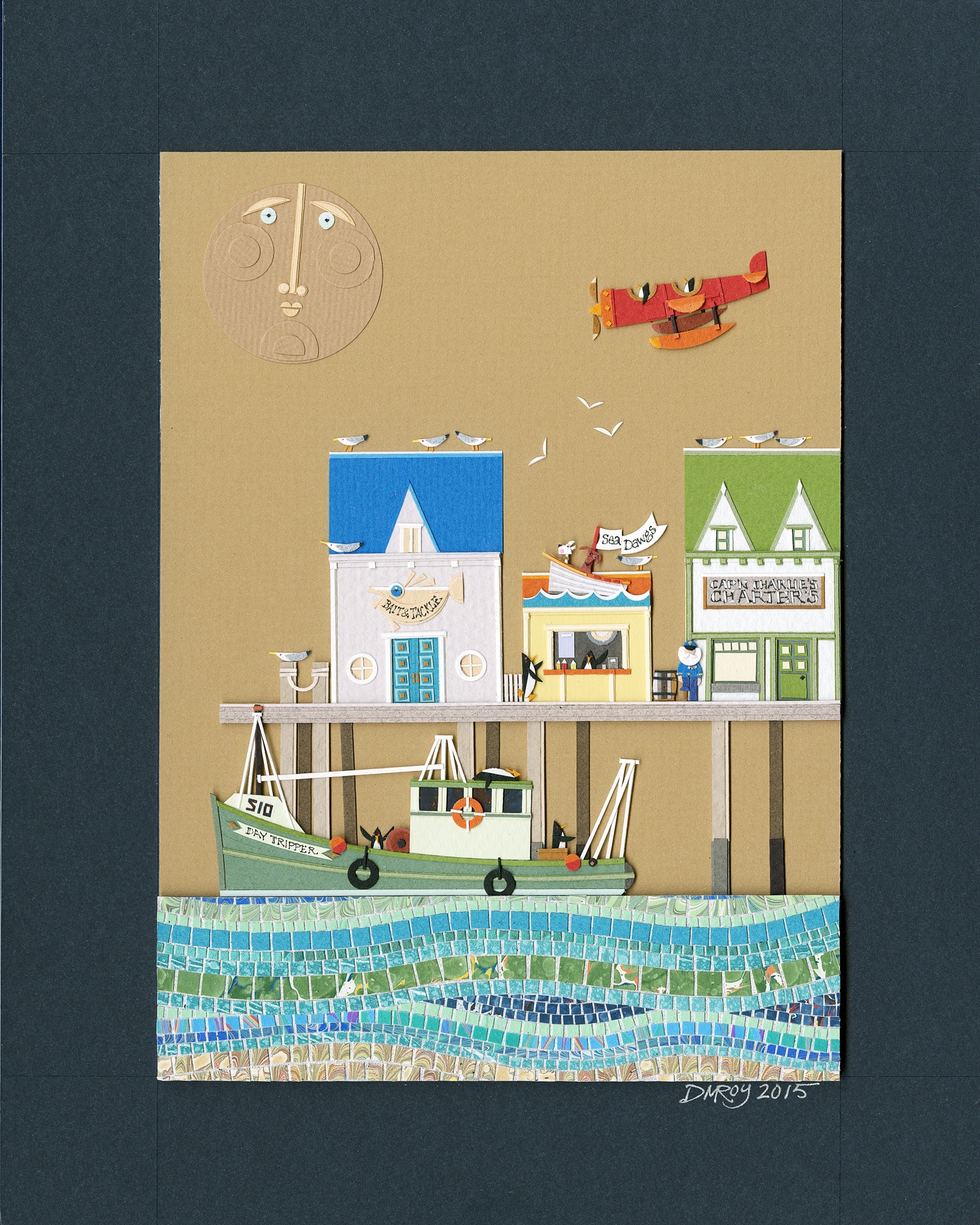 Doug Roy, Day Tripper, Cut Paper
TCR: Perhaps your art on display in this issue is working this ground and I’m not seeing it the right way??? What do you think?
DR: Maybe not. But that has never bothered me.
TCR: Thanks so much for your time and allowing us to feature your art, Doug. Your art is amazing!