
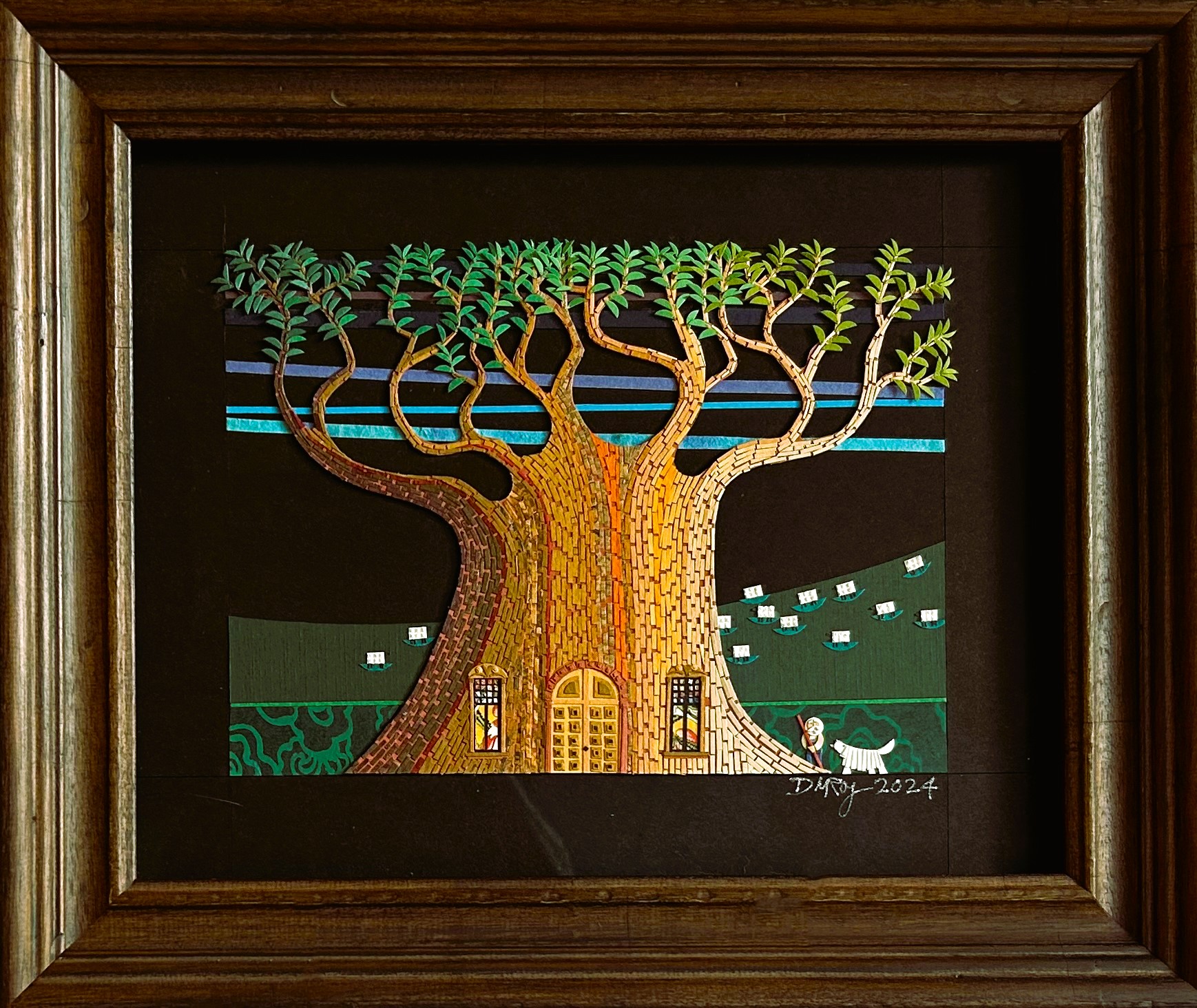
 Doug Roy, Cut Paper
Saint Steven
He sits in the back row at church. So shy he whispers. You’ve got to lean close to hear the stories. A gnarled face, patchy and cactus sharp beard; front teeth worn down to skinny gray posts; shirts with droopy necks; shoes so big they slap like flippers. Heart so kind his friends call him kin or Saint Steve.
Most nights we’re all asleep as he finishes dish washing at the ristorante, clocks out, climbs into the car he used to live in, searches the empty avenues around town for wanderers haunting his old perches and hideouts (bus station benches, darkened library porticos, donut store dumpsters) and hands out fancy Italian leftovers scraped off plates.
He’s wary of drunk drivers ever since one widowed him with a young daughter when they ran over his wife. Steve and his mom raised the girl, who went off to college, became a good cop. But when his mom died he lost his mind. Went nuts. Everything was in her name. Eviction followed. He took some clothes and the family’s oil paintings in the car and disappeared. Just wandered. Sometimes trying to die. No one could find him for half a year.
He spent that winter in a house that was abandoned, left with everything intact. He’d go to it in the dark of night. Leave in the dark of morning. A house of made beds and soft pillows, coins on the dresser in a little saucer, towels on the towel bars, everything still in the drawers as it was when the doors were shut and locked and usurped by the bank. He left everything in place, kept the beds made, didn’t count the money or pull the socks on. Later, after he had secured an apartment and married the big gal who rescued him off the train tracks, he sought out the man that had grown up in that house just to thank him.
Steve misses the rundown motel in the center of town that the city razed. It was a safe place for a lot of desperate people. They’d stand out on the balconies at rush hour, smoking and watching the sunset bounce off all the windshields driving home.
____________
Jessie Reid
Review by Dave Mehler
Of all of Jessie’s work, this one I think is my favorite, partly because of that last sentence. I love that line. Also my memory that the title of this piece used to be “Patron Saint of Italian Leftovers.”