
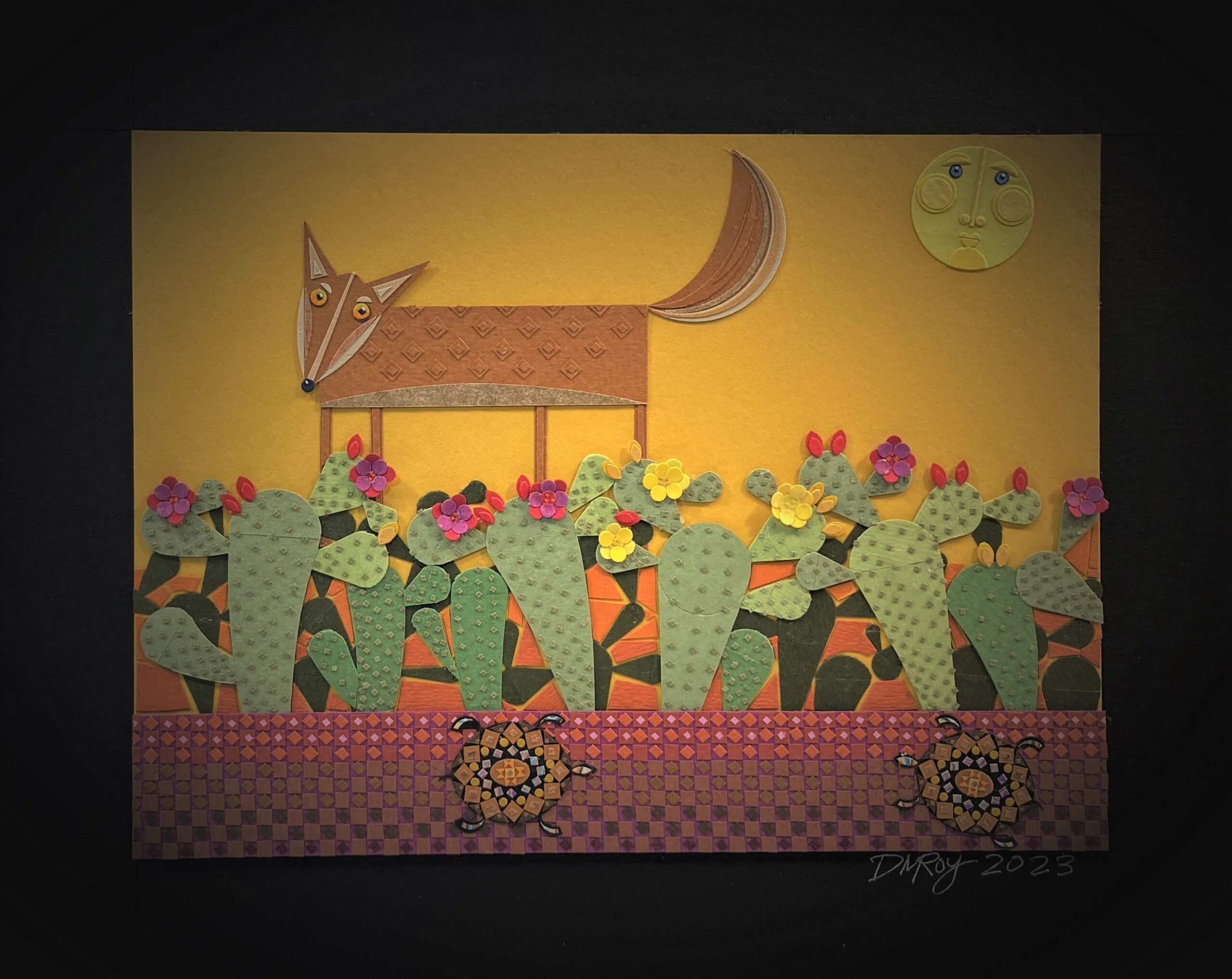
 Doug Roy, Prickly Pair, Cut Paper
Threatening Rock, January 22, 1941
built and rebuilt and
extended
citadel shrine storehouse private dwelling rooms
INTERVIEWER: Surely many people lived there.
SUBJECT: No, we built the great houses for dances—you know, the body circles through time and the space it lives in—and for viewing the sky. We kept our winter corn there, too, for hunger times. Only a few people lived at the great houses, the leaders and some servants, people to take care of things until the next festival.
Pueblo Bonito stood
stands
the monolith
partially crushed
the revered respected building
worshipped
or worshipped at
twenty-two
thousand
for every inhabitant of the region metric
tons of canyon wall
leaning leaning
was anyone there
SUBJECT: Three Navajos were chopping wood, about 300 feet away. The rock groaned. Dust shot out of cracks in it.
SCIENTIST: About as large
as a ten-story building,
the slab leaned out
about thirty or forty feet from plumb,
settled sharply,
and when it hit solid bottom
rocks from the top
broke loose and were propelled into the ruin.
SUBJECT: That word again. How romantic.
The lower two thirds
then pivoted on its outer edge
and fell down the slope toward the ruin.
The whole mass broke into many fragments
and an avalanche of rocks catapulted down the slope
and into the walls of the back portion of Pueblo Bonito
visitors from afar
INTERVIEWER: Tell us more about these visitors. Where did they come from?
SUBJECT: Well, first were the men from the south. They brought feathers and parrots and shells, and they brought ideas about the stars and sun. We built according to their plans. We had to. They would send a gang of warriors to a village, burn it, kill all the people, and cook them.
INTERVIEWER: Cook them?
SUBJECT: Yes, like animals. The men from the south would eat some of the cooked people. All the villages were terrified. We had to build for them or be cooked like animals.
INTERVIEWER: And there were other visitors?
SUBJECT: Yes, many years later, men came in machines. They dug into our homes. “Ruins,” they called them, as if they were dead. They read our bones. They could not see our people living there.
INTERVIEWER: But there were no people there then.
SUBJECT: Our people live in the earth when they have returned to the North. More visitors came. They built pathways between our homes, so many people could look at them and make pictures with their little boxes. But now they are gone, too. The earth is too dry for them, they have stopped coming.
Years no one was there
the wind chiseled
dust like mice
rain fed ice to prise
and cause the cliff to calve
the fall
_____________
Bruce Parker
Review by Marc Janssen
This is an interesting form, both this poem at the previous one, that starts out in verse than moves into an interview dialogue. I find this engaging as we look into the text of the discussion between scientist, interviewer, and subject. Very compelling.