
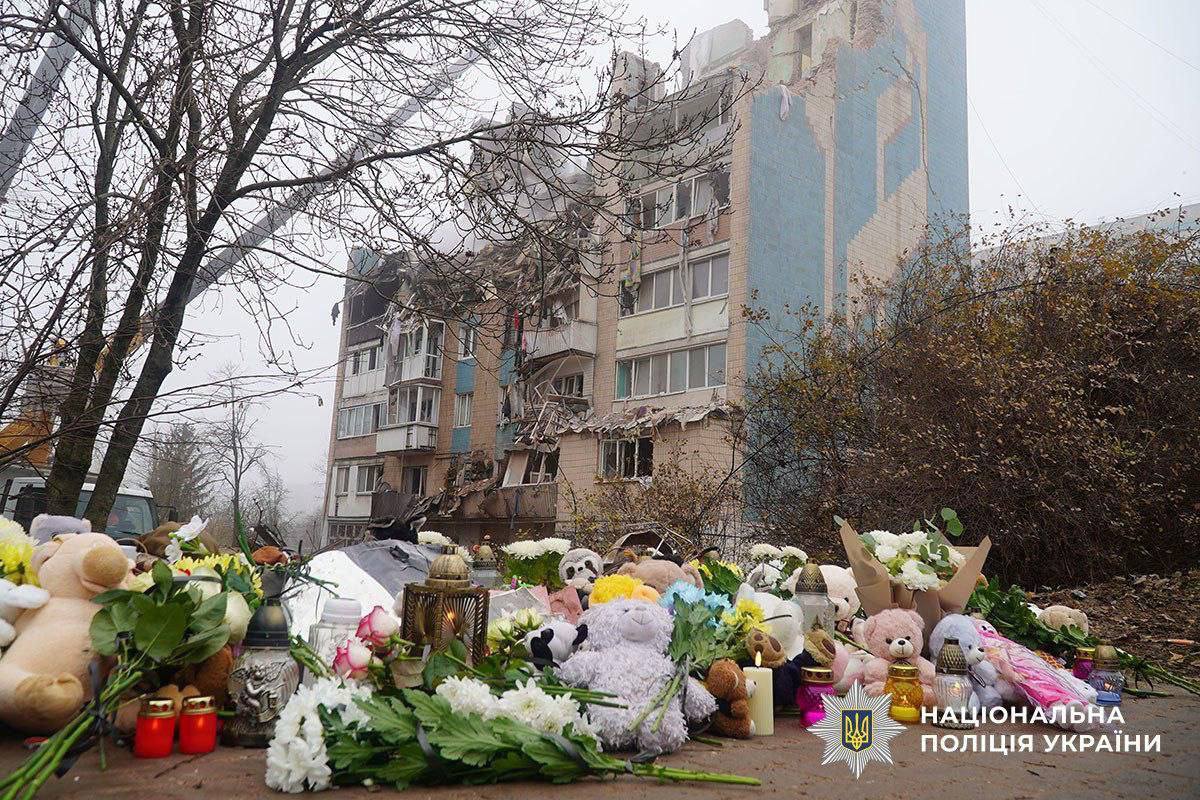
 Dmitry Blizniuk, Forwarded City Municipal Services (Kharkov) Photo
***
сьогодні ми живі і це добре.
це день бабака війни,
він знову прийшов до нас у гості 1316-й раз поспіль.
іноді я можу дозволити собі помріяти
про майбутнє,
це розкіш: рожеві крупинки зефіру на ганчірці.
моя мама сталева тростина,
вона не гнеться навіть під вибухами шахідів,
тільки ковтає таблетку від тиску,
швидко одягає шумозахисні навушники
і йде у ванну читати, курити.
вона одягає на ніч чистий гарний халат,
який пахне так приємно, як тільки мама може пахнути
мамою,
і я знаю чому.
українці хочуть виглядати гідно,
коли їхні тіла витягнуть з-під завалів.
мама планує наступного літа посадити помідори,
замовляє в інтернеті насіння – «леді мадонна»,
«помаранчева гордість», «вельможа».
а це моя кішка Мар’єн,
я все більше стаю схожим на неї,
живу мур-мур миттю,
одним днем, одним днем.
зариваюся в кішку обличчям, це діє краще за фенозепам,
це день бабака війни,
я вже це писав,
наш бабак схожий на плюшевого ведмедика
акуратно залишений біля сміттєвого бака,
ошалілий, в ковтунах, вимазаний дитячою кров’ю,
ґудзики очей блищать
дзеркально-мутним божевіллям.
я знаю, що завтра буде новий день війни,
і післязавтра буде новий день війни,
і після післязавтра…
***
(translated by Gari Light from Ukrainian)
today we are alive and that’s good.
it’s a groundhog of war day,
today it came to visit us again, for 1,316-th time in a row.
on occasion I may allow myself to dream
of the future,
which is a luxury: pink grains of marshmallow on a rag
my mom is akin to a steel sort of cane,
she does not bend even as a result of enemy drone explosions,
just merely swallowing her blood pressure medication pill,
while hastily putting on her noise-cancelling headphones
and heads to the bathroom to read and smoke
she changes into a fine clean robe for the night,
which smells as pleasantly,
as only mom could smell of mom,
and I know why,
it is that matter of decency, of how Ukrainians wish to look
when their bodies are pulled from the wreckage.
mom is planning to plant some tomatoes next summer,
she orders the seeds online – the types being “lady madonna”,
“an orange pride”, and “nobleman”.
and here’s my cat Maryen,
I am beginning to appear more and more like her.
living the meow moment,
one day at a time, one day.
I bury my face in that cat
it brings a much more effective relief than any anxiety meds,
it’s a groundhog of war day
I already wrote that,
our type of groundhog looks like a proverbial teddy bear
sensibly abandoned near a garbage can,
stunned, in tangles, smeared with baby blood.
its eye buttons sparkling
with its murky mirror psychosis.
I know that tomorrow there will be a new day of war,
and the day after tomorrow there will be a new day of war,
and the day after that after tomorrow…
________________
Dmitry Blizniuk
Review by Rick Adang
It’s so tempting to tackle massive social/political topics in poems, but so daunting. Good politics doesn’t guarantee good poetry. So how is it done? Dmitry’s poem provides a good model. He shows us his family engaged in everyday life in the middle of what seems to be a new 30-years War. Juxtaposing the horrors of the Ukraine war with the humor and pathos of family life brings both to life. The repetition of words and phrases emphasizes the Groundhog Day nature of the war. And meeting my personal desire for lines that just escape comprehension and pull me back to the poem are: “pink grains of marshmallow on a rag” and “a proverbial teddy bear / sensibly abandoned near a trash can”. These lines seem to individualize this family.
Review by Massimiliano Nastri
First of all, thanks to the translator. Has one to work for an imaginary transparency or prefer one aspect? I am not a professional translator and the authors are usually dead.
As a whole work, it was easily the one that affected me most. By training, I am an historian, European interwar and post-WWII period, authoritarian regimes (fascist, communist). The closeness between author and content goes almost to identity. Almost, because the poet does know with his images where he is doing what he is doing: the teddy bear, the face of the cat. Some verses resonate with the experience of those coming from labour camps and finding the everyday reality, how it moved on them piercing: “turns out we were still in heaven…”
That someone could save time to notice “faces floated on the lake’s surface as lilies”, “this world is an astonishing black-mirrored Cadillac”, I would like to hear him reading in the original.
The twist at the end (“it’s red, it’s red) incongruously perhaps reminded me of the scene in Don’t look Now – the silence after, which is the silence or, rather, the muted tone of a groundhog of war day, the relief and fraying of knowing another day, another day.
Review by Brian Jerrold Koester
I have been admiring the poetry of Dmitry Blizniuk for years. To my dismay he has been destined to become a kind of war poet — not that it has done his work any harm. I am writing this from a great distance; I have never been near actual war; but I have spent years in danger, waiting for the next immediate threat to manifest. So I think I have an idea of how aptly Blizniuk handles the “‘organized boredom’ of modern warfare” which is “punctuated by moments of terror” (phrases from WWI).
“[T]oday we are alive, and that’s good[.]” says the speaker in the first of these untitled poems. How telling that the voice needs to say it’s good to have survived. The speaker knows exactly how many days the war has been going on, and one day tends to be like the day before, “a groundhog day”. The speaker tells of the dignity of the people subjected to this ” unhurriedly unnerving and dull war’s hell”, “of how Ukrainians wish to look/when their bodies are pulled from the wreckage.”
But the speakers of these poems are not just waiting for disaster. To indicate the horrors Blizniuk shares with us some of the most powerful images I’ve ever read. There is the teddy bear smeared with baby’s blood. Not just abandoned, but sensibly abandoned. On top of that the teddy bear is proverbial. This is not an inanimate object: the teddy bear is stunned. Maybe the hardest punch of all is that the bear is psychotic. It may not even be able to recognize itself, but the gruesome mirror image it would see is reality itself.
Another horror is “the tender sandwich of days” “smeared as butter with blood and broken glass”. These are the only days. You eat the sandwich with the blood and broken glass, or you no longer experience days. Even more powerful to me is the tragedy within a tragedy that closes the second poem, the baby killed inside the mother who is crushed along with her new husband before they can begin their life together. Compare the actual wording of the image with my prose description of it, which is not a patch on the original. The poet really knows what he’s doing.
I understand as commentary or amplification a pair of images in the third poem. It seems to me to illustrate how a person might experience reality who lives in wartime and doesn’t just read about it in the news, from the safety of an empire. There is “a bunch of fallen leaves inside a wide puddle,” seen while the speaker is waiting for a traffic light to change. It seems to me the speaker sees this image as “faces float[ing] on the lake’s surface as lilies”. He needs “to run to the other shore of reality”. I can’t even guess whether it would be bad or good for the speaker to reach the other shore, but the depiction of the speaker’s inner state is profound.
Out of his horrific material Blizniuk has made artifacts we are lucky to have.
Review by Zeke Sanchez
This war is like a metronome, like a grandfather clock with its incessant, recurrent ticking. Many days and memories have slipped by. The poet is conscious of the nightmare, fully awake. His mother appears to become a symbol of that war. Perhaps of the resilient spirit necessary to survive sitting smoking in the bathroom while the drones drop grenades and other munitions outside, or crash into a building.
Review by Jared Pearce
The mashing of the groundhog, the mother, the cat, the war, and the speaker is striking.