

Maida Cummings, Featured Artist Interview, Issue #35
TCR: How did you get your start in art and art making. I believe you answered this briefly in the last issue as part of your artist statement, but for the sake of reminding us…
MC: I’ve always enjoyed drawing and making things. In the early 1990’s I started taking classes at Oregon College of Arts and Crafts (OCAC) and got serious about spending as much time as possible making art.
TCR: Who or what are your major influences?
MC: I’ve had many influences through the years. The excellent classes I took at OCAC in particular exposed me to the possibilities of many media and inspired me to explore many topics.
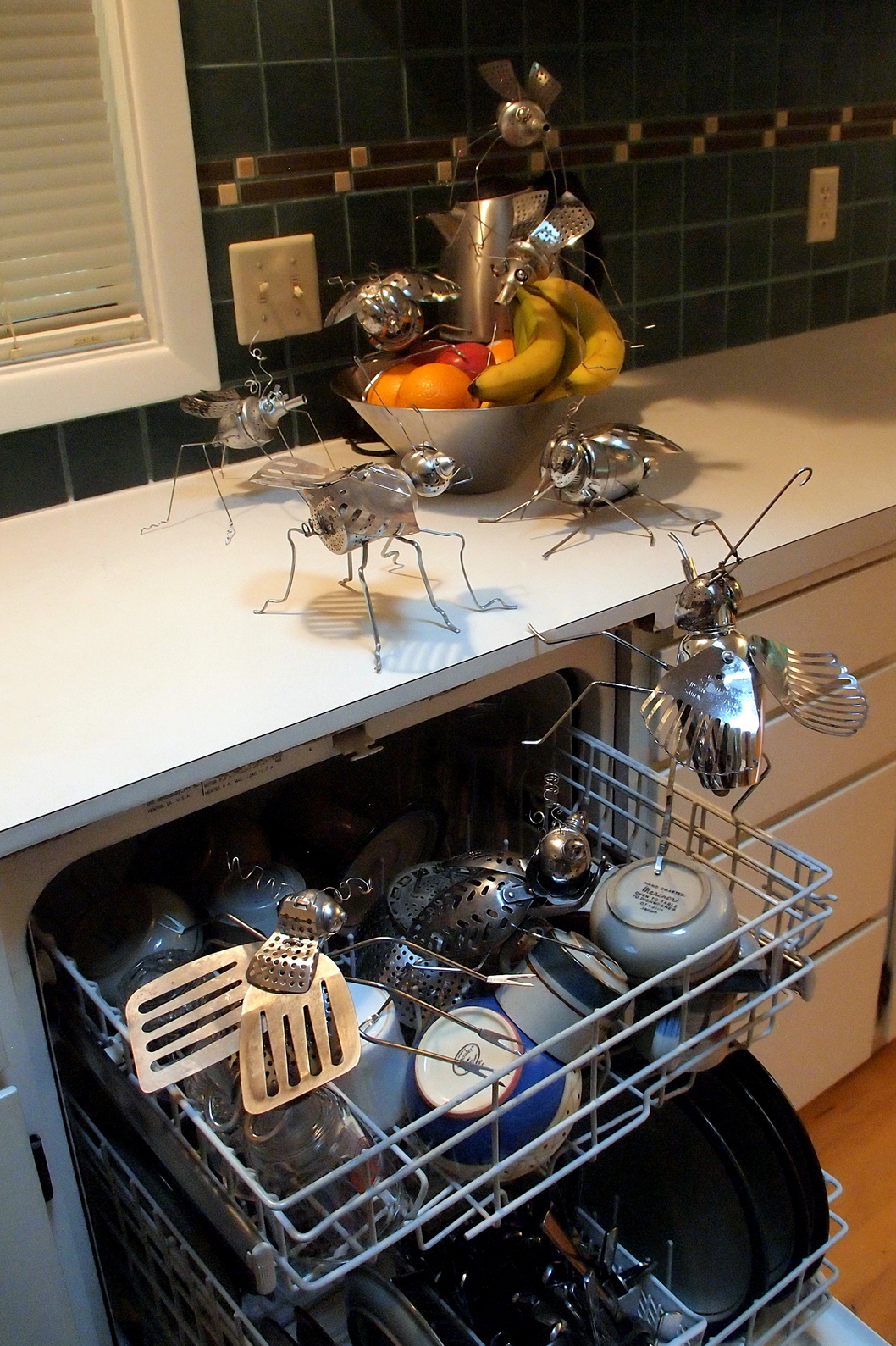
And junk drawers. I remember repeatedly staring into my grandparents’ large junk drawers transfixed. I sensed there was great potential there if I could just figure out what it was. Assemblage art is the answer.
TCR: I’m kind of curious, now that we’ve featured the art of your husband, John, in Issue #33 and now you in the last issue (#34) and then in this one for the second time—Do you and John influence or interact with one another artistically? I know that you do joint shows together in Newberg. Are you both off in your own corners or do you have contact in what you do and how you do it as individuals and as a couple?
MC: John and I do influence each other’s art. We often discuss our projects, trade ideas and when asked, critique each other’s work. We enjoy watching art videos together and cheering each other on.
TCR: The work we featured in the last issue was your two-dimensional work, and carried your flair, idiosyncratic vision for subject matter and is often beautiful, but you describe your multimedia work this way: “With found object assemblage I do my best to create a sense of unity using diverse, cast off, objects.” What I notice is the biggest takeaway here is a profound sense of humor, mischievous quirkiness, satire and social commentary, tempered by a strong sense of playfulness. Would you care to elaborate on this? To affirm or deny?
MC: I guess my humor, satire or social commentary in my work comes from being perplexed and confused about so many things in life. For example:
Why would anyone wear high heel shoes? They’re so uncomfortable and limiting.
What’s going to be the fate of the earth?
What adventures would Barbie be having as she inevitably gets older?
What fossils will future archaeologists dig up from the late Anthropocene era?
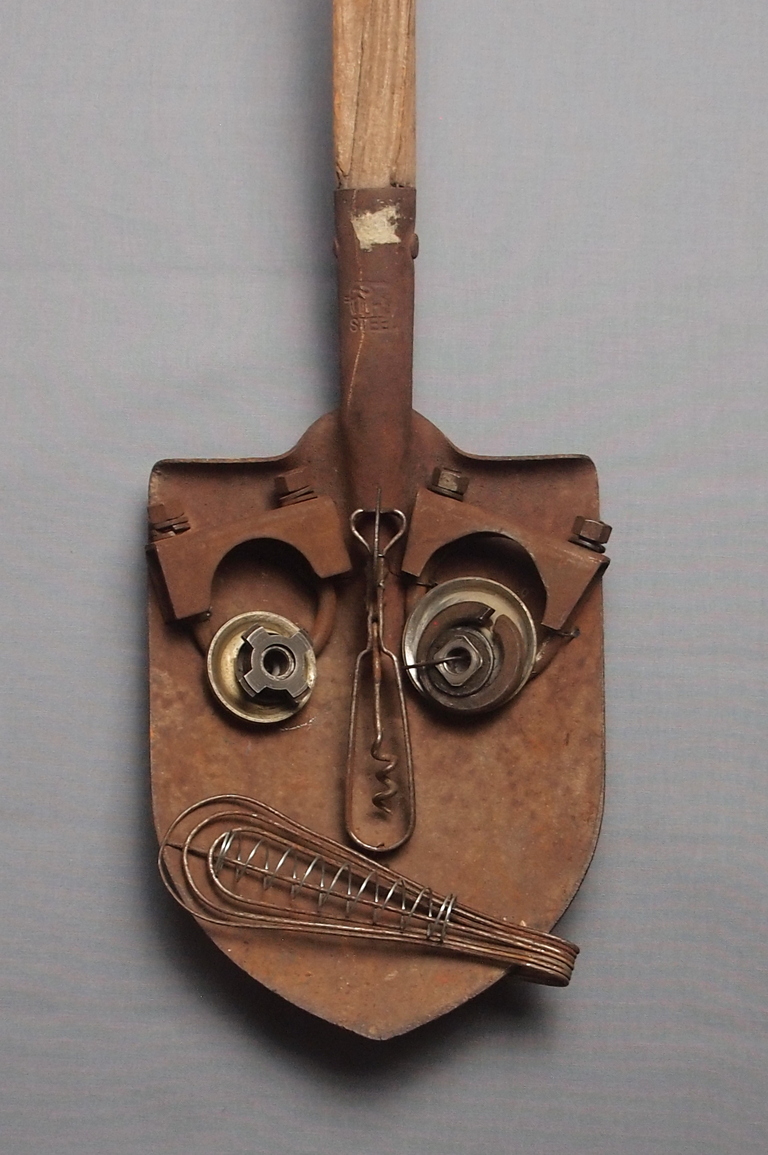
Why am I seeing so many faces in the garage?
Can yard work be more fun?
What can old typewriters be used for?


TCR: I think you really seem to enjoy process and investigation. Whereas some artists are fine simply representing, you make it harder on yourself by doing woodcuts, overlaying a print with multiple colors, not only drawing or painting an image or scene but adding to the processing of it. Do you gain in pleasure in the process or is it to have more sophisticated and involved effects on a piece of art? Even your two dimensional art often betrays layers of working start to finish.
MC: I do enjoy the process involved in art. It’s easy to get lost in the meditative process of making. Each media has its own challenges and problems to solve, which are frustrating but very satisfying if you can solve them.
Drawing and art in general makes staring at and studying a subject for long periods of time socially acceptable. The longer you really look at something carefully, the more interest and beauty you can find in even the most dilapidated scene or the deadest flower.
TCR: What is at the basis for why and how you create. Is it about creative play, processing, or discovery. Are you trying to think your way out of problems, witnessing to and representing the world as you see it. Is it exploration and playfulness? Is there a way to answer this question lightly, and seriously?
MC: All of the above.
I really enjoy coming up with new ideas. Then comes the wrestling with the media or collaborating with it, usually some of both, to come up with an end result that, if I’m lucky, approximates my original idea. All of it is usually fun, surprising and satisfying.

TCR: Have you experienced seasons of dryness and inactivity as an artist and at other times rich productivity? What has contributed to these seasons? Are you one of those people who always has a project going.
MC: I do have times of art inactivity. I usually have ideas for many projects I’m eager to get to but often can’t spend as much time on them as I’d like due to all the other obligations of daily life.
And the older I get the lazier I get.
TCR: How do you kickstart after a hiatus?
MC: After not being in the studio for a while it’s often hard to get back to work. I lure myself into my work space by just telling myself I will go down and just look at some art books or magazines for a bit.
Soon enough I’m back to work.
TCR: In Issue #34, (your two-dimensional issue) I had some really kind of darkly serious and at times tragic subject matter in the poems that I had no trouble pairing your work with. Because your work is largely light-hearted (especially on display in this, your assemblage of found objects issue), I found this surprising. I was startled to discover your work can have a dark edge to it, or at least has no problem sidling up to that—can hold its own bearing up under the weight and connection with it. How do you account for that?
MC: I guess in part I’m often attracted to old, withered, scared things because I see interest and beauty in their shapes and the remnants of their struggles.
Not so much when I look in the mirror though!
TCR: Any immediate goals for upcoming projects?
MC: My current goal is to utilize as many as possible of the garage sale and thrift store items I’ve collected through the years to make assemblages. Hopefully I can do this before I get hustled off to a nursing home and they put all my treasures in a dumpster.
TCR: I can already imagine all the things that might go missing if you ever did find yourself in a nursing home, but I’m not seeing that in your future. Wow, Maida–thanks for all the seriously fun and varied work over the last two issues. It has truly been a pleasure.
