
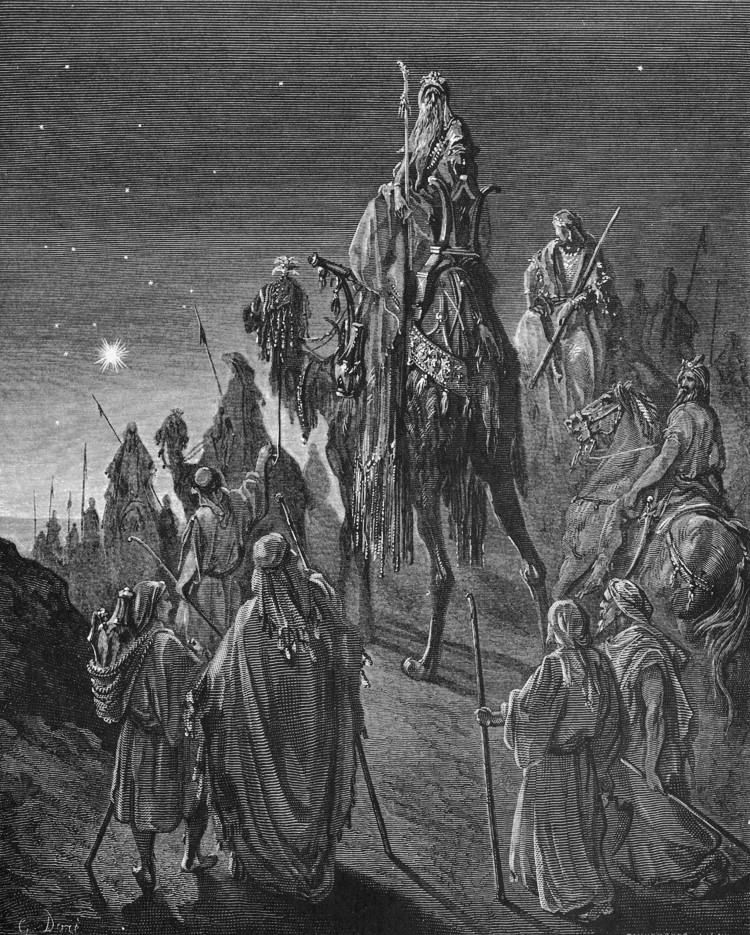
 Gustave Dore, Journey of the Magi, 1877
Herod
Saturday to solemnize my birthday,
trusting in the solace of excess, bade slaves
unbung young black-red cyprus, sweet as sin,
and gorged and revelled. But resting,
eyes half-shut, upon an Arab dancer’s breast,
unease eked in, then festered
and piled my gut with bile.
No plate in heat went skirting on the tiling
nor bellow brought a gossiper to cringe,
but I slept badly. Next morning wayworn sages
bearing letters, paid a visit,
ate ravenously as students, then, wary
of the tenor of my questions, pressed to leave.
Exchanging gifts and common salutations,
I posed a longer sojourn, and they (my enzymes
eating outwards) with more than policy refused.
Alone within my chamber watched their horses,
dun and flat-faced, cross the palisade
and track like crabs around a breasted hill.
Intent on forcing fate, I ran the gamut
till only one solution seemed secure.
Children who don’t age can’t rouse a rabble
nor stir the dogs of Rome to snarl and strike
and the unformed brats of Bethlehem seem fated price
for civil peace and all my father built.
I hit my lip till bloody, steeled my logic,
damning slack alternatives and a people
in the thrall of age-old myths. Called,
and, eardrum throbbing, poured my general wine.
________________
Daniel P. Stokes
Review by Massimo Fantuzzi
Past all the alibis. Past the feeble battles of logic and morals. Past the shady cover-ups. The game of win and lose hasn’t changed much in two thousand years; if anything, it has only grown more sophisticated. Children who don’t age… how prophetic. Today, this mantra seems to manifest in two ways: either by killing them young (the easy way) or by keeping them in a perpetual state of triggered adolescence. Ever heard the recently coined expression “Everyone is twelve now”? It explains a lot.