
Letter from the Editor
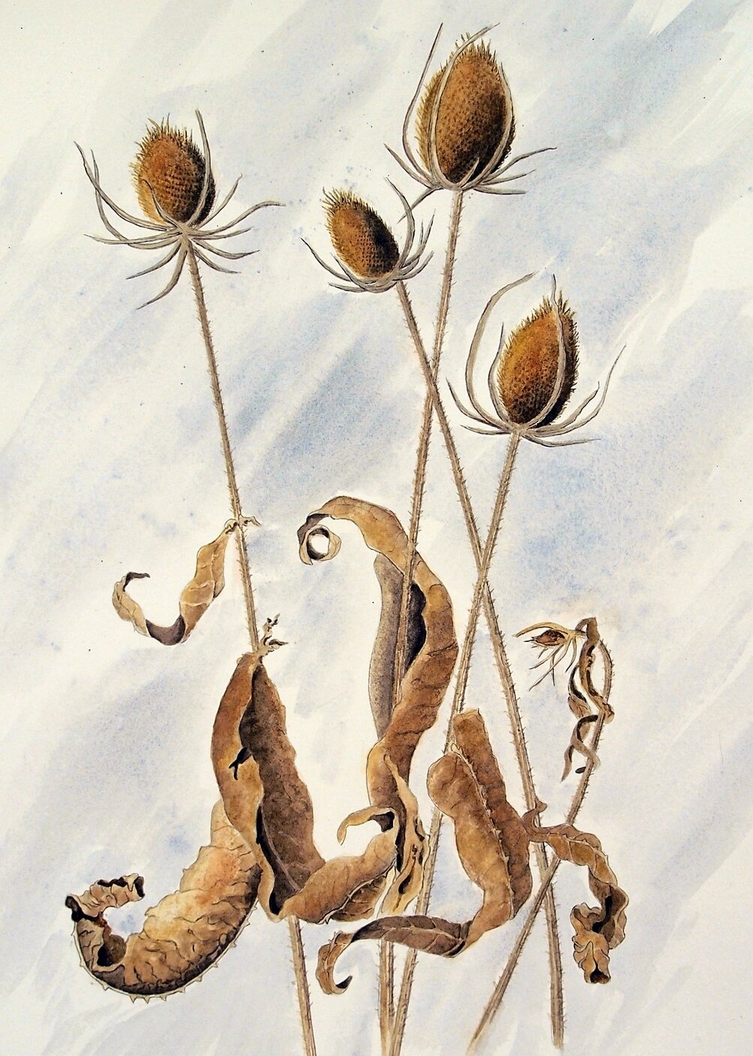
Sometimes I really don’t have any sense of the whole of an issue until I get close to the end of producing and formatting it. Until that point it’s all pretty much piecemeal. Believe me I realize this may sound strange, and it even startles me, but it’s because I reread the issue before choosing the art to complement the poems and then sometimes an issue will rise up off its haunches or its knees and just bite or slap me in the face with its force. I also think the featured artist, Maida Cummings, was a great surprise to me as well, because while eccentric, what is most characteristic of her work is a great sense of humor, and wackiness. You’ll see this in the next issue because we will feature her twice. Issue #34 will feature her two-dimensional work and in six months (January 2026) we will feature what she terms her assemblage work. I think her work is serious, but she is not guilty of taking herself too seriously. In the meantime, I could not have asked for a better artist to accompany what has turned out to be a rather dark issue thematically in regards to the poetry. I hadn’t realized the poems curated would be so well complemented by the art through, for example, spare minimal drawings of thistles and dead bugs, and mixed in with a lot of beautiful watercolor landscapes. A board member told me he thinks this is the strongest issue he’s ever participated in, and while I tend to think we outdo ourselves every time, I believe this time he is probably right. This issue is mighty strong despite the truism that your latest is always your favorite.
Also, it is with a great deal of pleasure to announce the publication of Zeke Sanchez’ book The Fire with the Two Dragon Smokes: From Before the Third Day, through our Downloadable Ebook platform at Penny University Press. Access it through the dropdown menu on our homepage or simply click here. I’m excited not only because this book is a truly fine short novel, but also our press has not published a book since November of 2018. I solicit books from contributors and we don’t usually consider genres outside poetry or criticism, but this novel is truly exceptional. After many attempts to secure a publisher, the book has rested in a drawer for far too long. We have featured Zeke’s poetry in the last several issues, including this one. I sincerely hope you will download it and give it a try. The book offers gritty realism with turns of magical realism especially and powerfully toward the end, which proves unforgettable. Coming in at slightly over a 100 pages the book takes place during the 70’s in the Western US, and features Jeremy, a young Hispanic man who joins his older cousin, Henry, a Vietnam Vet, to work on a hotshot wildfire fighting crew. They are driven or flown into the middle of fire hot spots, usually inserted by helicopter to create fire breaks to head off oncoming fires by cutting down trees with chainsaws and cutting trenches through the underbrush with shovels and picks (actually Pulaskis—combination of pick and axe). The danger and difficulty of this dirty job cannot be overstated which requires the men to be not only courageous, level-headed and disciplined, but also in peak physical condition. Add to this racial strife, heat, long hours with a bare minimum of basics, and at times faulty leadership. The reader watching the characters react and narrowly escape one dangerous situation after another as the novel progresses sees a blurring between the jungle warfare missions in east Asia experienced by a few of the crew, and this job ‘back in the world.’ Sanchez is writing fiction, not memoir, but he also worked on just such a crew as he describes after returning from Vietnam and has the background necessary to write this novel. In some ways I see Zeke in Jeremy, who is sharp but green, but also at times he is the older cousin, Henry, who has returned not that long before from his tour overseas to become a wildfire fighter. Their job is to follow orders, survive, and protect lives and property, and whenever possible save against the deforestation and destruction of wilderness areas. This is a book about ordinary but flawed heroes. I can’t recommend it enough.
I think the best thing for me to do is simply to offer a few excerpts from Zeke’s book:
“On the second Montana fire they took down the giant pine leaning out into the chasm. Jeremy held precariously onto his chainsaw protruding out over the precipice. Not looking down, trying to bring the pine down. But the tree locked the blade and chain in place, pinched it. Jeremy tried several times to free it, but could not. There were terrible things that could happen. The saw could whip out and cut him in two. If he leaned out too far, trying to angle the chainsaw, it could buck out of the tree and knock him into the precipice. Or the tree could snap, arching back at him, killing him on his narrow perch. He leaned out into the air with the saw.”
__________
“They had to pound the earth, tear at it brutishly but with skill, tick-tocking endlessly, really without thinking, thinking only of continuing. They were young and strong and could continue like this swinging the heavy Pulaski for hours, which they did.”
__________
“Thirty minutes passed and Willie made radio contact. He did not believe he had misread the map. He swore they had misprinted the map. The contours were wrong, he insisted. The plateau was much bigger on the map. This plateau they found was barely a cow pasture. And the men supported him, shaking their heads, looking slightly down at the ground even as he slowly shook his own head from side to side looking up at the cloudy sky smudged with smoke. The rain that had promised to fall never did break open from the sky. It rained only enough to make the men feel slightly cold, enough to make them wonder if it would slow down the fire they were told was traveling fast from somewhere towards them. There was never much of a discussion with the rank and file like Jeremy and Harold, so they only ever had a slight idea of where they were and where the fire was. Generally, they were either in the middle of a fire, holding back its borders or in front of it involved in using flares to start a backfire. But this one felt different.”
__________
“But the fire swooped down on them with profound suddenness. Willie was dumbfounded when he saw the smoke below and the flame jumping from treetop to treetop. It didn’t make sense, there was little wind. It had rained a bit, but the fog had lifted. The fire had a personality of its own, as if it would describe its own life, its own pathway. “We got to get to it now, boys. Ain’t no dozer up here to cut a big line. We’re it!’”
__________
“During the night they were awakened by loud crashes, sometimes one large break and then a cascading effect of a widow maker rolling, tumbling down the mountain. Or stones loosened by the fire. It reminded Murph and Henry of rolling artillery fire in Vietnam, or a distant B-52 strike on enemy concentrations. Henry knew those vaunted weapons high up above the clouds often missed their targets, not because the B-52’s couldn’t deliver on the target but because the North Vietnamese had years of warfare and knew how to make the Americans miss. Likewise he was hoping the burned, dead trees and rolling megaton rocks would come down and get stuck on fallen trees or bounce over the road harmlessly. He found it interesting, contemplated how similar Vietnam was to firefighting, similar but also vastly different. He had tried to explain it to his young cousin, who had not made it to Nam. “Here, you have the heat and the thirst and the lack of sleep, and you have it there too. In that way they are similar,” Henry told him.”
__________
“Jeremy turned to Henry. “Will they make it, cous’?”
Henry was in a world somewhere between where he actually stood today among the trees around him and yesterday’s starkly real world of the Vietnam War. He was back in the States, had been back a number of years, but he carried Vietnam with him, and at moments like this it showed on his face. It was passive, yet sad, and quietly determined. Not to panic, but to speak truth to his younger cousin, he said, “They’ll do what they have to do. The question is ‘Will we make it?’”
Murph grinned at what Henry was saying. Something passed between the two veterans. Jeremy saw it.
“Willie’s got twenty, twenty-one, firefighters to worry about here,” Henry whispered. “What’s he going to do? That fire’s not behaving the way he thought, I bet.’”
__________
“The crew wasn’t scared yet. Jeremy, who constantly picked up on the mood of the crew, sensed this. He was among the youngest, and realized years later, probably the most impressionable. But as he watched Murph and his cousin he sensed a sadness wrapping around both. It wasn’t like they were afraid, he would remember. More like they were sad, and maybe not for themselves. Maybe for the memories of people in their past. In retirement four or five decades into the future Jeremy would sit in a house by the lake in South Georgia , far from his native Pacific Northwest, sit at a desk facing away from the placid lake behind him, sit at that desk because it faced a long green stretch of grass with black pine where hardly ever a car or a stray dog passed – and he would occasionally remember his past, and he would dig back to those memories. He would remember the pall of sadness around those two. It actually drew him tighter to Murph and to his cousin, Henry.”
___________
“Henry wasn’t sure he had actually survived the fire. Did he really come out of the fire, or was it that he was living those last few seconds as if each second was exploded outward like a bubble, encompassing everything that he would have done had he lived a full life, and not been charred beyond recognition on that ridge. Was it an illusion that he lived a full life? Those stories about your life as a ribbon unspooled in that last moment, are they true?
When he looked back on that summer of fire, he wondered if the fires had been as he imagined them. The fires grew in size, frequency and intensity in the decades after the new century, greater fires than when he was a young man, or so he imagined, or was he really actually alive in that future? Hah! He could laugh at the possibility. How could he be dead if he knew about the forest fires that would eat up huge swaths of California in the next century? No way, could this be possible.
But, there it was. There were moments, too, when his imagination got the better of him, when he wasn’t sure it wasn’t all imagination.
It had all happened in a few seconds. Split seconds. You are there, and you are gone.
But in that moment you are able to see the past and the future. But Henry Romero was a future looking guy.
If he died, why did he die suddenly, and not shrivel his soul in agony as the fire ate through his aluminum shelter, peeling it away from the backing. Why didn’t he die screaming as others had on other fires? It didn’t make sense. He was in a predicament. But he stepped through the wall of flame. Stepped through a hall of mirrors. Each mirror represented an outcome. Which one did Henry Altimiro Romero take?”
__________
“The squad leader who was supposed to get them out of a jam had survived, quite by accident. Now in the twilight of his life, “accident” was an important word for Jeremy. He was beginning finally to let go of everything he had regretted, understanding that accidents, the accidental life so to speak, was as real as any well-planned life. For most people, that is.”
___________
I hope you’ve enjoyed this preview of the book. I also hope you’ll richly enjoy all the poetry, contributor reviews, and the art on every page in Issue #34. Welcome!